

When it comes to gut health, mood balance, and immunity, the terms probiotics vs prebiotics often confuse even health-savvy readers. Add postbiotics to the mix, and it feels like a scientific riddle. Yet these “biotics” quietly influence everything—from how well you digest breakfast to how resilient you feel under stress.
In this guide, we’ll unpack what each one does, how they work together, and why understanding them can help you improve both your physical and mental wellness.
Your Gut Microbiome: A Hidden Super-System
Within your digestive tract resides a thriving community of trillions of microbes, collectively known as the gut microbiome. These microorganisms help digest nutrients, produce vitamins, and train your immune system.
A 2024 study in Clinical Nutrition found that a balanced microbiome supports emotional well-being through the gut-brain axis—the two-way communication channel between your gut and brain. Simply put, when your gut is healthy, your mood tends to follow.

Probiotics: The Helpful Bacteria
Probiotics are live microorganisms that, when consumed in the right amounts, deliver proven health benefits. According to the International Scientific Association for Probiotics and Prebiotics (ISAPP, 2025), probiotics strengthen your immune defense, enhance nutrient absorption, and reduce inflammation.
Key Benefits of Probiotics
-
Balance the gut microbiota
-
Block harmful pathogens
-
Improve digestion and metabolism
-
Support mood and cognitive health
You’ll find probiotics in yogurt, kefir, miso, kimchi, or as supplements containing strains like Lactobacillus and Bifidobacterium.
📖 Related Reading: Probiotics for Stress, Anxiety, and Depression
Prebiotics: Food for the Good Guys

If probiotics are the workers, prebiotics are their fuel. Prebiotics are fibers your body can’t digest but your gut bacteria love to eat. When they ferment these fibers, they produce short-chain fatty acids (SCFAs) that lower inflammation, protect the gut lining, and even improve sleep.
A 2024 review in Frontiers in Nutrition linked prebiotic intake to reduced stress levels and stronger immune function.

Postbiotics: The Hidden Heroes
Once probiotics do their job, they leave behind postbiotics—beneficial by-products like vitamins, peptides, and SCFAs. These compounds strengthen the intestinal barrier, reduce oxidative stress, and support skin and immune health.
A 2025 Nature Microbiology paper showed postbiotics may lower inflammation even without live bacteria, making them ideal for people sensitive to probiotics.

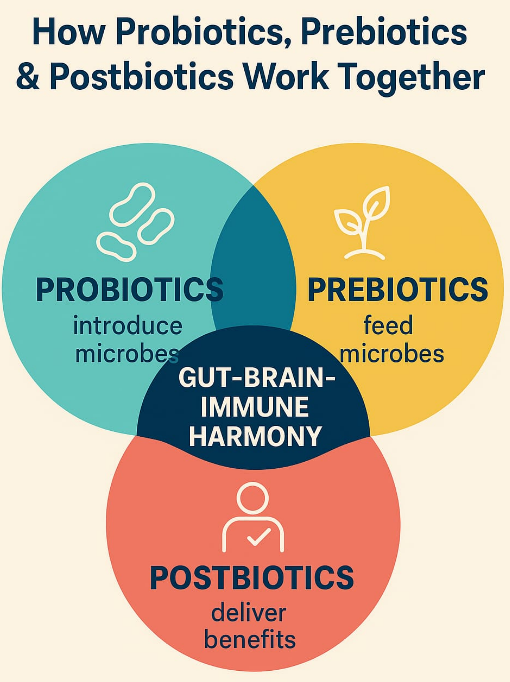
How Probiotics vs Prebiotics Work Together
Think of your gut as a community project:
-
Probiotics are the builders restoring balance.
-
Prebiotics provide the materials and energy.
-
Postbiotics are the finished results—better digestion, immunity, and mood.
When combined in one product, they’re called synbiotics, a trend gaining traction in 2025’s wellness market.
Read Next: 4 Reasons to Add Probiotics to Your Daily Routine
Tech Meets Gut Health
Smart nutrition and AI are changing how we manage gut wellness.
Wearables like ZOE AI and BiomeSense now analyze microbiome data to personalize diet plans and supplement choices. They help you find the right balance of probiotics vs prebiotics based on your daily habits, stress, and sleep cycles.
FAQs Probiotics vs Prebiotics:
1. What is the main difference between probiotics and prebiotics?
Probiotics are live beneficial bacteria that improve gut health and immunity, while prebiotics are non-digestible fibers that feed these bacteria. Together, they help maintain a healthy microbiome, improve digestion, and support mood balance.
2. Can I take probiotics and prebiotics together?
Yes! Combining both is highly effective. When taken together—often called synbiotics—they create a balanced gut environment where probiotics thrive on the prebiotics you consume, enhancing digestion and immunity.
3. Are prebiotics better than probiotics?
Neither is “better” than the other; they serve different roles. Probiotics introduce beneficial bacteria, while prebiotics help nourish and sustain them. A healthy gut needs both for optimal balance.
4. Do probiotics really improve mood and mental health?
Emerging research suggests yes. Studies from 2024–2025 show probiotics can influence the gut-brain axis, producing neurotransmitters like serotonin and GABA that affect mood, stress, and cognitive function.
5. What foods are rich in prebiotics and probiotics?
Probiotic foods include yogurt, kefir, kimchi, miso, and fermented vegetables.
Prebiotic foods include bananas, onions, garlic, asparagus, and oats. Eating a mix of both supports digestion, energy, and immune function.
6. Are postbiotics important too?
Absolutely. Postbiotics are beneficial compounds created by probiotics, including vitamins and short-chain fatty acids. They help reduce inflammation, improve immunity, and support skin and metabolic health—even without live bacteria.
7. Can probiotics or prebiotics cause side effects?
Some people may experience mild bloating or gas when first adding probiotics or prebiotics to their diet. Start slowly, increase intake gradually, and consult a healthcare professional if symptoms persist.
8. How long does it take to notice results from probiotics or prebiotics?
Results vary by individual, but most people notice improvements in digestion, energy, and mood within 2–4 weeks of consistent use, especially when paired with a balanced diet and proper hydration.
9. Do antibiotics affect probiotics?
Yes. Antibiotics can kill both harmful and beneficial bacteria. Taking probiotics after antibiotics helps restore the gut microbiome faster and may reduce digestive discomfort.
10. How can technology help track gut health?
AI-based apps and wearables like ZOE AI and BiomeSense analyze your microbiome and dietary habits to recommend personalized probiotics vs prebiotics plans for better gut, mood, and immune health.
Pro Tip: For best results, combine probiotics, prebiotics, and postbiotics in your daily routine—and use data from AI wellness apps to personalize your nutrition strategy.


